Monday, January 31, 2011

Thailand adventure can begin

I have decided to undertake a small media experiment and try to fully document my next adventure - diving in Thailand. I will document preparations and trip itself. All material will be published on this blog as time goes on. Goal is to try to produce a nice trip report with enough information and related media to be used by maybe some other media channel or people interesting in similar trips.

Trip is organized by Predrag Peca Radifkovic from Diving Club Sebastian from Belgrade, Serbia and is a nice mix of diving and relaxing. Most of us are visiting Thailand and Asia for the first time. Our diving experience comes from diving in mostly Adriatic Sea and Red Sea so we are quite familiar with warm sea diving. It is a mix of diving and relaxing since sometimes when ones goes on so distant travel it is a shame if only diving is involved and no other time is spent on exploring more local place and learning and enjoying in it for some time on "regular" way also.


Travel plan:
26. 02. 2011.
- Arrival to Bangkok and staying overnight in hotel
27.02. 2011. - Flight to Phuket + mini van from Phukhet to Khao Lak (90km) where we get embarked the ship a.k.a. live-a-board
27.02. 2011. - 05. 03. 2011. - We stay onboard for 6 days and from here we dive and cruise around world famous Similan islands.
05. 03. 2011. - Ship gets to Khao Lak in afternoon hours and we take the mini van to resort in Phukhet.
05. 03. 2011. - 10.03.2011. - Chilling and enjoying in Phuket.
10.03.2011. - Return to Bangkok and staying overnight in hotel
11.03.2011. - Departure from Bangkok in early afternoon hours

For this trip we're flying with Turkish Airlines and their hub is in Istanbul.

Next post will put more details around ship and diving plan.

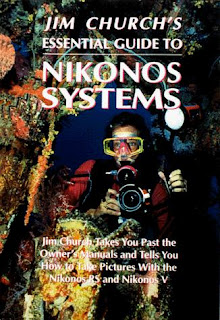
Book review: Jim Church's Essential Guide to Nikonos Systems


I started with this book as next best resource after official user guide in my adventure with Nikonos V underwater camera.

It is old book, hard to find these days but it contains essential information not only specific about Nikonos systems, but on overall underwater photography set of topics. I can say that decent part of book is dedicated to flash photography, both manual and TTL based.

Book contains many color and BW images that very descriptively explain all material that writer offers to readers.

Entire book contains many useful advises where writer explains some realistic situation and then offers a solution. Believe me, you will have all those situations.

I highly recommend this book for any underwater photographer: to those who are just starting and to those who don't understand why their TTL is not perfect.

Friday, April 2, 2010

Nikonos V - going old school

Couple of years ago I lost my digital camera (Sony W7) with underwater housing on one of the dives (Tihanny, Herceg Novi, Montenegro) and that is when my underwater photo adventure stopped.

From than, I have been discussing various options on how to proceed with underwater photography with some of my friends, following various discussions on Internet and decided that I should go both old school and digital.

Last couple of years I see lot of people with compact cameras in underwater housing who produce massive amount of photos on every dive, but rarely really an excellent photos are produced. Due to big capacity of memory cards, divers are sucked into this spiral of shoot-as-many-as-you-can-since-no-limit-on-space-you-have violence. Also, they don't go into technical details that make photography like exposition, aperture, shutter speed, sensitivity, metering and all those things that make one produce photography he wants.

So, I have decided to polish mu photography skills by taking an old Nikonos V. Major influence on this decision was put by my good friend, my diving instructor and excellent photographer Vladan Milisavljevic. So what did I get?

I got a Nikonos V orange body in pretty good shape. With body I got U/W 35mm and U/W 28mm Nikkor lenses. Then I bought Nikon underwater flash SB-105 with necessary arms to connect it to camera. And finally I got Sea & Sea 15mm lens with appropriate viewfinder.

Nikonos V introduced lot of changes when compared to Nikonos III and IV, but from technology perspective even at that time was very simple and Nikon had much more advanced models out there. Nikonos V is not an SLR and requires viewfinder for framing the shoots. Build in covers 35mm and 28mm, but other lenses require specific viewfinders. Camera itself is very small and compact. It contains 2 sensors for measuring, one is used for TTL flash and another is used for build-in exposure meter - you set the aperture and camera chooses shutter speed. It contains easy to replace battery and does not require any specific training.

Camera itself contains 4 user maintainable o-rings which cover all user removable parts: battery, flash connector, lens and camera back. On top of this, Nikonos also contains a set of non-user replaceable o-rings which can be replaced by skilled repairman. Problem is that now there are no many left, but I will think about that in 2 years I would say.

Fair price for body and 35mm and 28mm lens is around 250 - 300 USD.

U/W 35mm and U/W 28mm Nikkor lenses are pretty much basic lenses which are cheap but not so useful for me or most of people who are not in macro photography. I think I will not even try 35mm and will use 28mm when trying to do something else then wide angle shoots. Underwater photography is specific and there is one simple rule: in order to get good photos, you need to get close to the subject. This is due to fact that water between the lens and subject is far from being good medium when compared to air and introduces lot of side effects even if visibility is great.

Due to this I decided that I must have a solid wide angle lens if I really want to capture some good shoots. Nikon produced also 20mm and 15mm lenses but those are even today still very expensive believe it or not. There were also 3rd party lenses and Sea & Sea is the company which after Nikon produced most of other Nikonos lenses. So I have decided to go for Sea & Sea 15mm and got myself also a viewfinder that goes with it. I payed for this around 250 USD and think it is worth more when I look at some European prices.

For those who did not know, when diving and going down in depth, colors start to disappear. Red is the first one that disappears and finally you're left with blue and gray at 40m and below. Due to this fact, in order to capture all those crazy colors, one needs to have an underwater flash. Alternative is to use filters, red filter for example, but that is just a way to deal it and not a good replacement. So, I opted for SB-105 which is pretty good flash and people are using it today with digital cameras as well. This is one of the latest Nikon underwater flashed and I thing it came out when Nikonos RS came out (underwater amphibious Nikon SLR). Beside TTL control it offers several other modes, like manual and slave which can be used for many different reasons.

Finally I got Nikonos V user manual and Jim Church's Essential Guide To Nikonos System book which is the bible for Nikonos.

Reading these materials an talking to Vladan made me feel capable of taking nice shoots and in 2 weeks from now I will be in situation to do so since going back to Red Sea on live-aboard adventure which will cover northern region of Red Sea and lot of famous wrecks where I hope my 15mm lens will do it's best. Drawback will be that I will develop all images when I get back since I will be living on a boat so it will be a true challenge to get some good photos when you cannot preview what you did. Due to that I will have 2 practice dives in a pool with Nikonos so I can take some test shoots, get images and analyze them before I hit the road.

Final important decisions is choosing the films and type of films. I have decided to take most of shoots with negative films due to first trip with Nikonos. Negative is capable of better handling the inappropriate exposure and comes with higher sensitivity. i plan to take a loot of "in-blue" shoots and shots of wrecks with maybe only some details exposed to flash. Anyway, will pack up couple of slide films just to try that as well. Choice has come to Fuji film and their selection of films which I will probably get in Calumet store here in Amsterdam.

Wish me all the best and when I come back, I will share what I managed to accomplish.

Finally, I would like to thank Vladan for all the effort he has put to get me ready for this adventure.

Arduino - what's it all about?

When I got to Blast Radius, one of my new colleagues shared with me (thanks Oscar) that he was working something with Arduino. At that point I had no idea what Arduino is. I got interested and decided to look into it.

So, it looks that new era has begun where people who never thought would dig into electronics and assembly something made of electronic components are actually starting to build some let's call them devices.

Arduino is a platform that consist of hardware and software. Hardware assumes microprocessor and prototype board, while software assumes SDK for Arduino specific language which is based on Wiring which looks pretty much as any other OO programming language from core language perspective. You will notice that Wiring also
has its own hardware platform so we can say that Arduino and Wiring are pretty much similar concepts. Both of them are targeted to people with no formal electrical engineering interests like architects, designers, artists ...

Arduino hardware is manufactured in Italy and consists of several options which vary in version of microprocessor and some details and size of proto board. Microprocessors come from ATmega family and in general were not familiar to me based on what previously I had chance to see in electronics stores. Proto board brings everything necessary do download the program from computer down to microprocessor. These days that is done by embedded USB port on proto board. Proto board distributes all control ports of microprocessor to appropriate pins on top of the board.

Apart from this basic hardware, a set of other hardware add-on is available in what is known as "shield". So, you can get Bluetooth, Wi-Fi, Ethernet and so on. So you simply buy additional board and connected it with basic Arduino proto board and voila.

Programming is simple. OK, I get money for living by developing software, but this is really easy. Per my opinion, requires elementary and basic computer skills school and suitable for kids as well.

This is perfect companion for winter days, when once want to play a bit. Also, prototyping new concepts in some creative environments where people are trying to define new interaction, bring new ideas is core idea behind this.

Arduino can be bought online in lot of online stores that ell electronics and I would say can be found pretty much across EU. Price varies from around 35e for basic model to around 100e for advanced models in kit with lot of passive electrical components like resistors, diods and some auxiliary components like switches, motors, wire ...

One can digest all there is on this topic in couple of weeks so no purpose on writing more ... get your board, get some tools, find some time and have a good time :-).

Sunday, December 20, 2009

My Playground

In order to setup the context for this post I must give small introduction on myself from IT perspective.

I am in software development for many years now. Started back in late 90s with some HTML, JavaScript, Delphi (object Pascal) ... then moved to standard web setup of that time which is still standard: php and MySql and then in early 2k moved to Java with emphasis on Web and JEE which become my first focal point in this huge stack of technologies. Some other post will explain exact stack I've been and am still using from Java perspective.

Recently worked a bit with Flex, started looking into Grails and discovering some other new and cool stuff.

On top of that I have huge stack of ideas in terms of some projects, some should be free and some should be small start-ups.

Finally I have reached a point that I need to have a working playground for all these ideas.

Anyone starts with his notebook, then that becomes too rigid, then you move onto some virtual environments like Parallels or in my case Sun's VirtualBox. VirtualBox is great, you can download from some sites images with your favorite blend of Linux and simply run them. Tools are pretty intuitive and easy to use. With couple of clicks you can set up virtual environment and make some serious playgrounds within the resource pool of your notebook.

I am using at home Mac PowerBook G4 and using the office notebook for playing around since all I play with ends up used on some project I am working on. Now I need to play more seriously and need option to involve other people as well. This eventually defined whole new criteria for my playground. Not only that it needs to be sufficient, but also available on Internet.

This is how I got to Amazon Web Services. They have all I need: resources, access to Internet, existing tools, predefined images and the cost is reasonable.

I have decided that my playground will include some tools SVN, Trac or RedMine so I can properly set up the configuration management for these pet projects of mine. This will affect my only by having some additional load that i will have to pay since cost at Amazon consists of how much instances you have and how much time they were running, how much space you took and what was the traffic.

Here is what I will do. I will start with one CentOS Linux image that will be configured to run from EBS so that I can stop and run it without loosing my data. This option is available only from couple of weeks ago per my understanding and it solves lot of problems. Then I will have another EBS volume which will be used by MySQL and one volume for SVN repository.

I have chosen CentOS since I am working with lot of JBoss products/frameworks and used to work with RedHat so that was somehow the natural choice. I am really not some Linux admin which is fully into it, but I feel this is good choice.

I am looking to initially set up the following components:
1. Apache Web Server with necessary modules for the other components
2. Php
3. Java
4. Tomcat v6
5. JBoss AS v5
6. MySQL
7. SVN
8. Ruby
9. Grails

On top of that I plan to setup:
1. Redmine or Trac - still not sure, will need to think bout it for some time. Used both, need to summarize what I need and what is easiest thing to do. Looking for integration of everything into one of these bundles. Plan to come up with post that will be comparing several open source PM tools.
2. MediaWiki with bunch of extensions and custom theme since my first pet project is wiki :-)
3. Drupal pumped up with whole s..t of extensions. I feel that Drupal is great things piece of software for bunch of web CMS based projects and would like to spend more time around it.

This is the already work in progress and next posts will deal with setup of the Amazon image.

Plan for the upcoming week is Amazon image running from EBS with MySQL, PHP, Apache, Tomcat.

Sunday, December 13, 2009

First Blog ever

Finally ... I have decided to hit the keyboard of my "god only knows how old" PowerBook G4 and start sharing some thoughts, ideas, experiences, plans ... what ever :-)

Since I moved to Amsterdam I find myself repeating to all my friends, same questions I get, same answers I send ... starts to get boring, playing the same record on and on.

Facebook status is not good enough for some experiences, thoughts, ideas I want to share so here we are ... finally I will have the ability to test my writing skills as well ... I do think of writing some novel some day ... but until, let's blog!

Originally when I started thinking I had the idea to share experiences from various trips I am taking on yearly basis, to share some ideas and concepts on which I am working during my daily job and to just throw in some bits and pieces and to come up with some pretty much diverse mush up.

Now on top of it since I just moved to Amsterdam, I will be writing on this interesting city, on what Holland has to offer from my perspective and how somebody else who just recently moved here can find a way around a bit better maybe then I did when I came.

Enough for first blog ... coming back soon.